My flat roof leaks again. Do I overlay it or tear it off?
An overlay may be an option if the existing roof is dry, the deck is sound and local code allows another layer. It usually costs less and causes less disruption than a tear-off. If the insulation is wet or the deck is damaged, the old roof should come off. An inspection helps decide which is right.
When an overlay makes sense
A new single-ply membrane, such as TPO, can often be installed over an existing flat roof when that roof is dry and in sound condition. An overlay avoids removing the old roof, which can save time and money.
When the roof needs to come off
Wet insulation trapped under a new membrane can damage the roof deck over time, and a deck that sags or holds water needs to be repaired. Building codes also limit how many layers a roof can have. In those cases, a full tear-off is the better choice.
Drainage matters
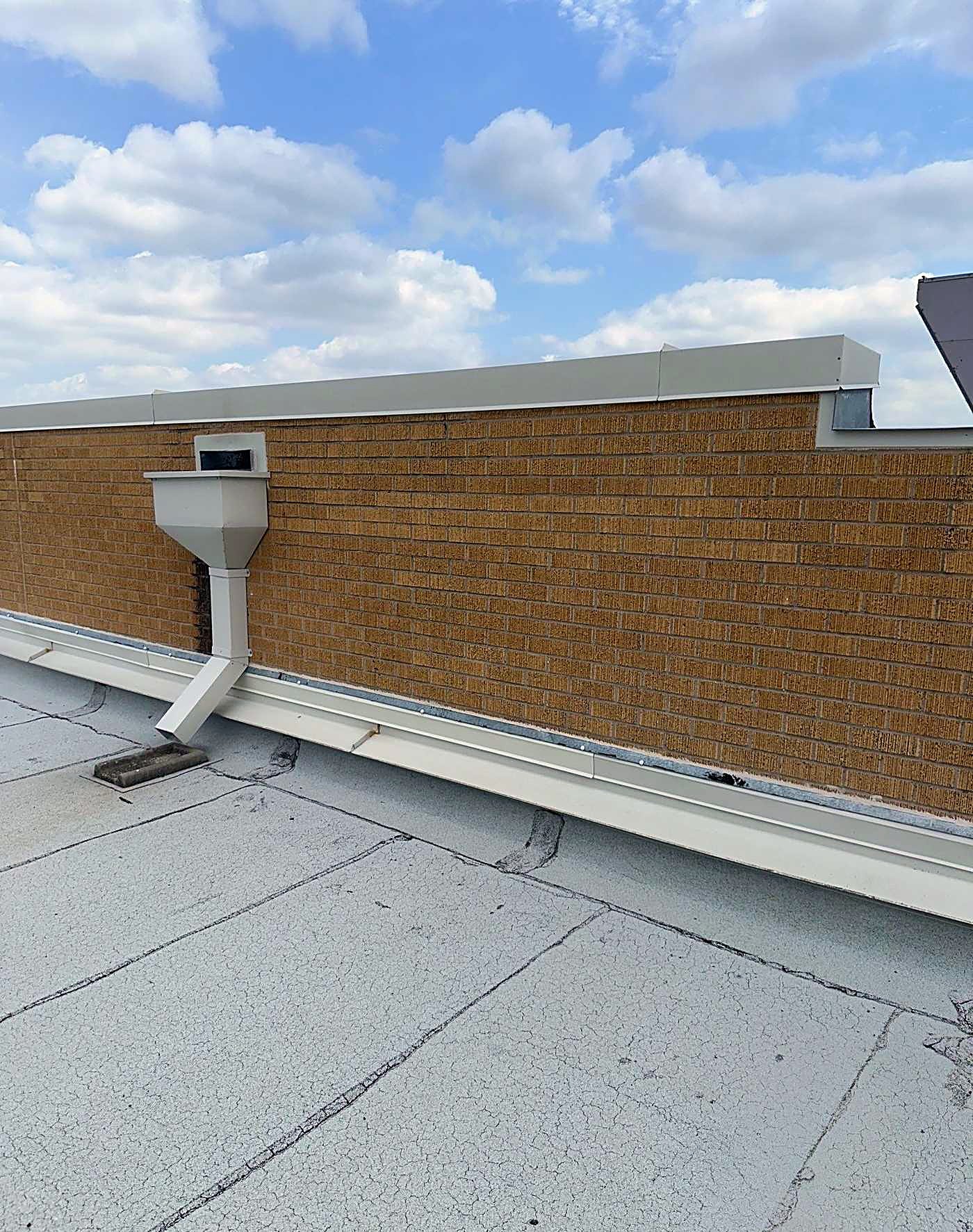
Many flat roof leaks are caused by drainage problems, such as clogged drains, damaged gutters or low spots where water collects. A new roof should include fixing those problems, or the leaks can come back.
Related questions
Does a building need to be empty during an overlay?
Not usually. Many commercial roofs are overlaid or replaced while the building stays in use. We can talk through the schedule for your property.
How long does a flat commercial roof last?
It depends on the material, the installation, drainage and maintenance. Good drainage and regular maintenance help a flat roof last longer.
